The difficult mission of bringing He-Man to a new generation
Few pop culture properties have a visual identity as striking as Masters of the Universe. Created by Mattel in the 1980s, the franchise became a phenomenon through toys, animations, comics and other media.
However, adapting this universe for modern cinema required an important decision: relying solely on nostalgia could limit the film's reach. Many recent projects based on old franchises have faced criticism precisely for relying too much on so-called “fan service”, pleasing only those who already knew that world.
The new film sought to avoid this problem by turning Adam's story into a journey of discovery. The protagonist does not immediately emerge as the invincible hero that fans know. He is presented as someone distant from his past, who needs to understand his origin and accept his destiny as He-Man. This approach allows new viewers to discover Eternia alongside the character.
A new beginning for a mythology over 40 years old
One of the greatest virtues of production is understanding that an adaptation does not need to repeat exactly what came before.
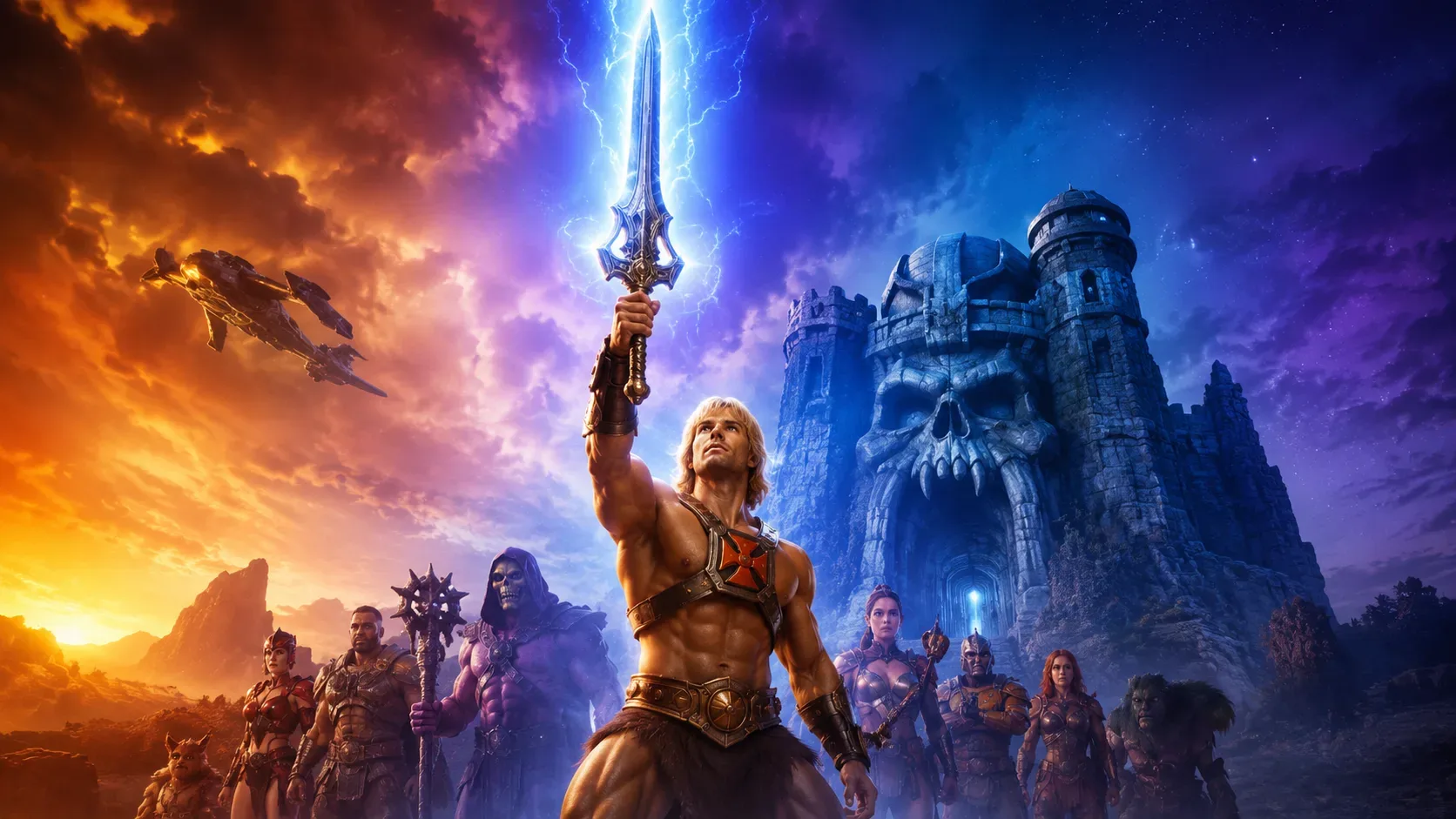
The film uses classic elements such as the Sword of Power, Castle Grayskull, Teela, Mentor and the villain Skeletor, but rearranges the narrative to function as a modern origin story.
The plot follows Adam after years away from Eternia. Guided again by the Sword of Power, he returns to his home planet, now threatened by Skeletor's rule. To save his people, he must definitively embrace his identity as He-Man.
This narrative choice is fundamental to bringing new audiences together, because the viewer does not need to know decades of previous stories to understand the conflict.
The balance between nostalgia and modernization
The greatest merit of Masters of the Universe lies in the balance between honoring the past and talking to the present.
Longtime fans encounter references that were part of their childhood: classic characters, the epic fantasy aesthetic, the Sword of Power and symbolic moments like Adam's famous transformation into He-Man.
At the same time, Travis Knight's direction adopts a current cinematic language, with more elaborate action scenes, modern visual effects and greater emotional depth of the characters. The production uses contemporary technologies from major studios, including the work of companies specializing in visual effects such as ILM, DNEG and Cinesite.
This strategy is similar to what large modern franchises often seek to accomplish: preserving their original identity while creating a new gateway for today's audience.
The cast as a bridge between generations
Another important element for the success of the renewal was the choice of cast.
Nicholas Galitzine takes on the role of Prince Adam and He-Man, bringing a more human interpretation of the character before his transformation into the most powerful warrior in the universe.
Alongside you, the film brings together well-known names from cinema and television, such as Camila Mendes in the role of Teela, Idris Elba as Mentor, Morena Baccarin as the Enchantress and Jared Leto as the great villain Skeletor.
This combination helps make the universe more attractive to an audience that may have never seen the original cartoon.
The importance of not repeating mistakes from previous adaptations
The history of He-Man in cinemas has a remarkable previous chapter: the 1987 film starring Dolph Lundgren.
Although it has become a cult work over the years, the production faced commercial difficulties upon its release, grossing approximately US$17 million against an estimated budget of US$22 million. Part of the limitations at the time involved budget restrictions and significant changes to the Eternia universe.
The new film appears in a completely different context, with greater technological resources and the possibility of presenting the fantastic world created by Mattel on a scale much closer to the imagination of fans.
Reception and debate between different generations
One of the most interesting aspects of the release of Masters of the Universe was the debate about its ability to please different audiences.
Old fans review the film primarily for its respect for the source material, while younger viewers note the quality of the adventure, humor, characters, and visual spectacle.
This encounter between generations represents one of the biggest challenges facing the current entertainment industry: keeping historical franchises relevant without relying exclusively on affective memory.
Although individual opinions vary, the film's proposal makes clear its objective of functioning both as a tribute and as a new starting point for the He-Man saga.
The future of Masters of the Universe
He-Man's return to theaters demonstrates an increasingly common trend in Hollywood: revitalizing classic properties for a new audience.
The true success of these productions does not just depend on recovering symbols of the past, but on creating new emotional bonds. When a child or teenager becomes interested in He-Man for the first time, the franchise stops being just nostalgia and becomes part of active popular culture again.
Masters of the Universe attempts precisely this transition: honoring more than four decades of history while paving the way for new adventures in Eternia.
Conclusion
Masters of the Universe (2026) does not attempt to replace the version that marked the childhood of millions of people. Its main objective is to do something more complex: allow parents, children and different generations to share the same universe.
By combining the classic He-Man mythology with a modern narrative, new actors, cutting-edge visual effects and a more accessible approach, the film shows how old franchises can remain relevant.
The result is a production that seeks to balance memory and renewal, showing that He-Man's strength was never just in his sword, but in the ability of his universe to continue inspiring new generations.